


17 Days in Central Greece & the Peloponnese
Land Only Price: $3995 (Cdn)
Maximum: 12 People

Day 1 |
Athens |
The group will meet at the Hotel Plaka in the heart of Athens. Dinner has been arranged at a local ouzeri at the foot of the Acropolis, to sample some wholesome, traditional Greek fare and to get acquainted.
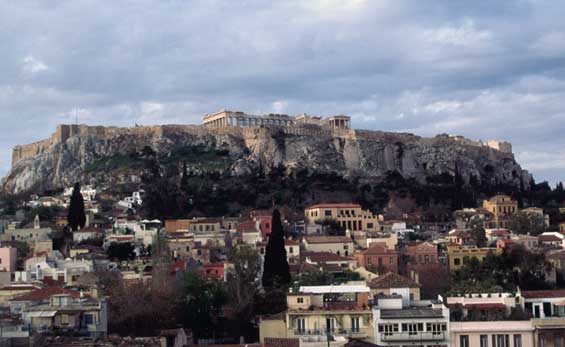
View of the Acropolis from the Roof Garden of the Hotel
Day 2 |
Athens |
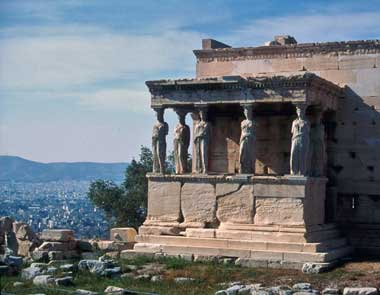
On our first full day in Greece, we will take it easy and spend the morning exploring the Plaka district with its warren of shops. After lunch, we will climb up the Acropolis—the ancient citadel and religious centre of the Classical city. The most important building on the summit is the Parthenon, which was dedicated to the city’s patroness, the goddess Athena. Other notable structures include the Erechtheion, with its famous “Porch of the Maidens,” and the Propylaea.
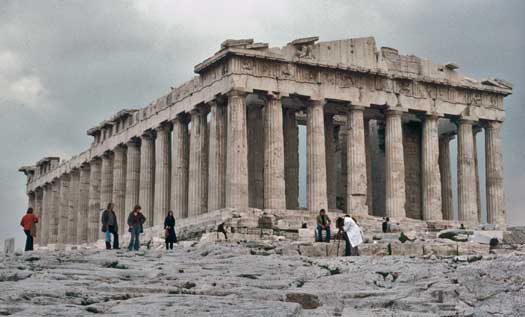
The Parthenon
Day 3 |
Delphi |
In the morning, we will drive to Delphi, the site of the Sanctuary of Apollo and the most important religious centre in the Classical Greek world. Situated on the slopes of Mount Parnassus, it was the home of the famous oracle whose pronouncements carried enormous weight both in Greece and abroad.
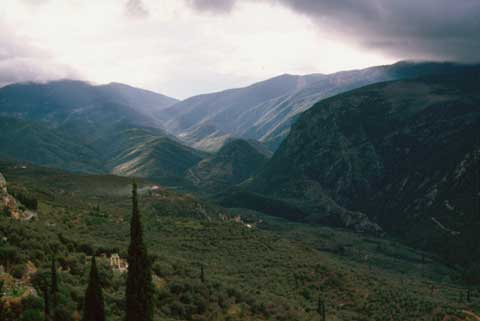
View up the Valley from Delphi
Day 4 |
Delphi |
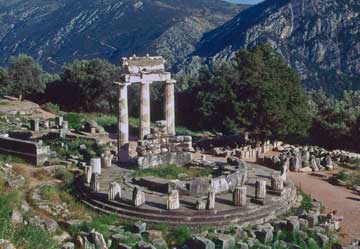
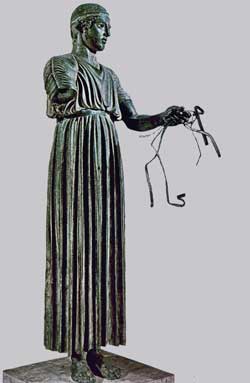
On Saturday, we will tour the archaeological remains of the Sanctuary of Apollo at Delphi. Within its precincts are a number of important buildings-the Temple of Apollo, a Stadium, a Theatre and numerous treasuries built by individual cities to house their offerings to the god. Afterwards, we will visit the Archaeological Museum whose exhibits include the famous ‘Bronze Charioteer’.
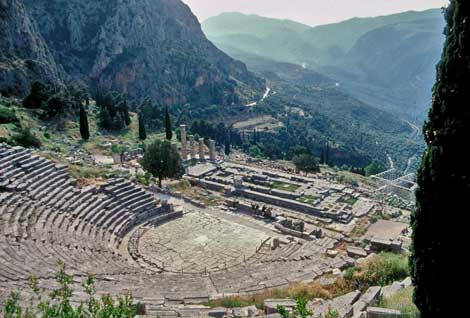
Delphi. The Temple of Apollo
Day 5 |
Olympia |
We will drive along the north coast of the Gulf of Corinth, stopping for lunch along the way, to Naupaktos where we will take the short ferry crossing to Patras. From there we will take the national road to Pyrgos and on to Olympia where accommodation has been arranged at one of the local hotels.
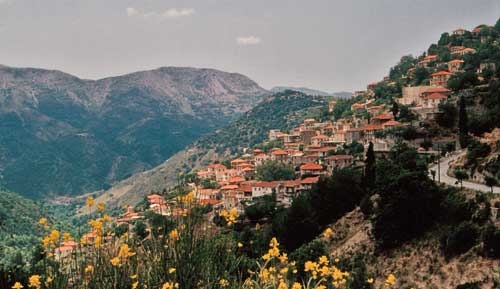
Elis. The mountain village of Lagadia
Day 6 |
Olympia |
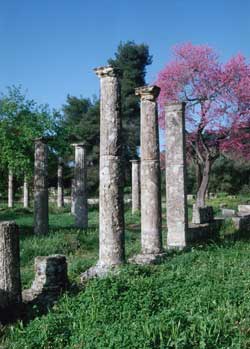
At Olympia we will tour the archaeological remains of the Sanctuary of Zeus—the site of the first Olympic Games. Monuments include the Temples of Zeus and of Hera; the Palaistra where the boxers and wrestlers trained; the Gymnasion, which was used for the discus and javelin; and the Stadium where the races took place. Then we will visit the Archaeological Museum whose treasures include the pediment friezes from the Temple of Zeus and the marble statue of Nike (“Victory”) by Paioniose.
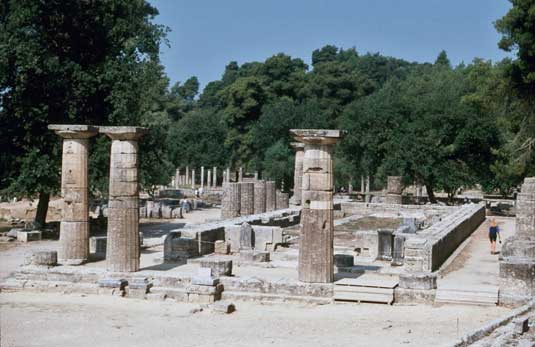
Olympia. The Temple of Hera
Day 7 |
Pylos |
We will spend the day gradually making our way south through the hills of eastern Elis to Pylos on the Messenian coast where we will spend the next three nights. Along the way, we will stop at ancient Bassae, site of the ancient Temple of Epicurean Apollo.
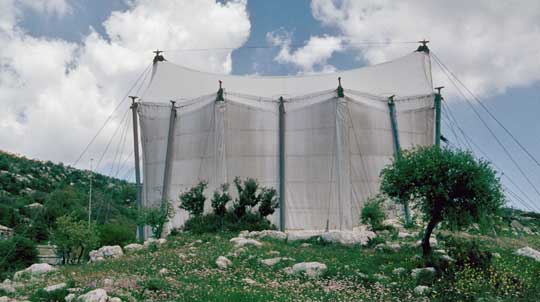
Bassae. The Temple of Apollo under wraps
Day 8 |
Pylos |
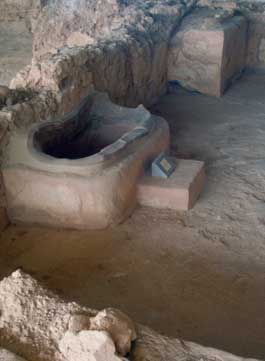
In the morning we will tour the Palace of Nestor at Ano Englianos, a Late Bronze Age site identified with the legendary king who was considered the wisest of the Greek heroes who fought in the Trojan War. The palace was excavated by Carl Blegen in the 1950’s and remains the only example from Mycenaean times to be completely uncovered. We will then proceed to the local museum at Chora to view the material recovered in the excavations.
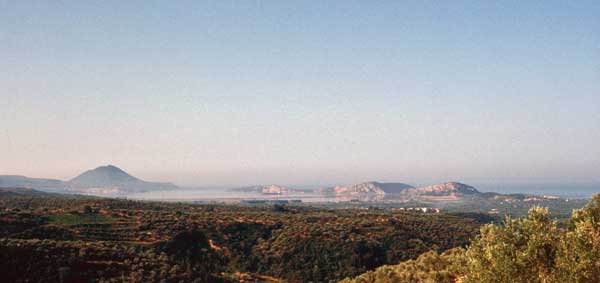
View of Navarino Bay from Nestor's Palace
Day 9 |
Monemvasia |
We will drive to Monemvasia where we will spend one night. On the way, we will stop at the Menelaion, the supposed site of the palace of Menelaos and Helen that stands on a hill near the town of Sparta. Part of a Bronze Age settlement has been found along with a Classical temple dedicated to the Homeric king and queen.
Day 10 |
Monemvasia |
The name Monemvasia is derived from the Greek mone emvassi (‘single entrance’) and was famous for the sweet, fortified red wine known to the English (who could not get enough of the stuff) as malmsey. The town was founded by the Byzantines in the 6th century at the foot of an immense outcrop of rock, linked to the mainland by a narrow causeway. After the Ottoman conquest, the town became a bit of a backwater, which means that it was spared the attentions of developers and retains a lot of its charm. We will spend the day exploring the town, its churches and the fortress that dominates the town.

Monemvasia
Day 11 |
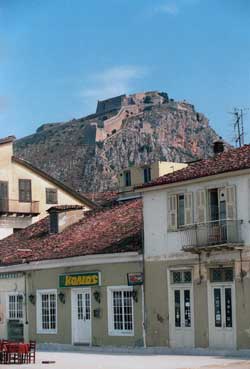
Nafplion |
In the morning, we will take a drive out to the abandoned Byzantine city of Mystras. The site is exceptionally well preserved and its many churches have been lovingly restored. A highlight of the visit is the Frankish castle on the summit of the hill. In the afternoon, we will proceed through Tripoli to the port of Nafplion on the Gulf of Argos.
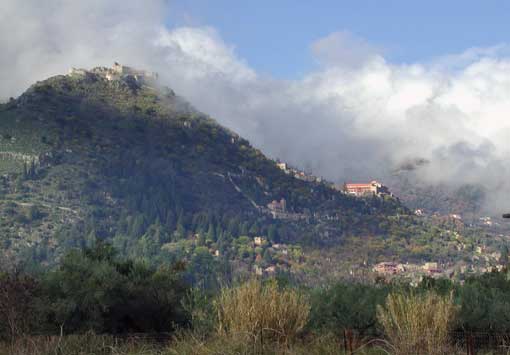
The Byzantine City of Mystras
Day 12 |
Nafplion |
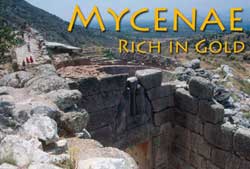
Nafplion is an excellent base for visiting the many Classical and Bronze Age sites of the Argolid. We will set out Tuesday morning and drive to the great Mycenaean fortress at Tiryns to tour its remains. We will have lunch in the village of Mycenae, before touring the site. Mycenae is a Late Bronze Age citadel, which Homer says was the seat of Agamemnon, leader of the Greek forces during the Trojan War. The massive fortification walls, entered through the Lion Gate, still survive, as do many of the buildings of the interior.
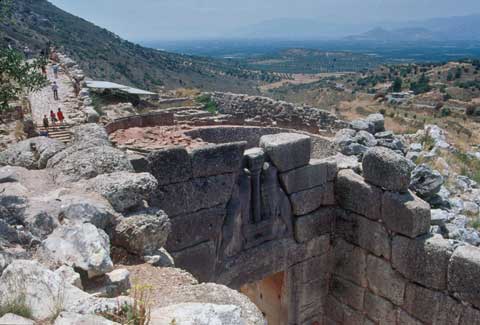
The Citadel of Mycenae. Lion Gate & Grave Circle A
Day 13 |
Nafplion |
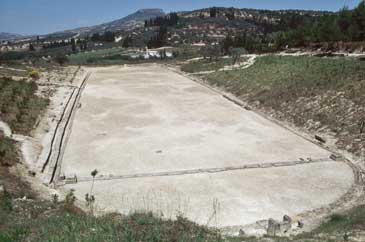
On Sunday, we will turn our attention to some of the Classical sites in the vicinity and drive north to Nemea, site of one of the major Panhellenic Games. Along with the Stadium and other buildings associated with the competitions, there are the remains of the Temple of Zeus. We will then head north to ancient Corinth to have lunch and explore the remains of the Roman agora and the Temple of Apollo.
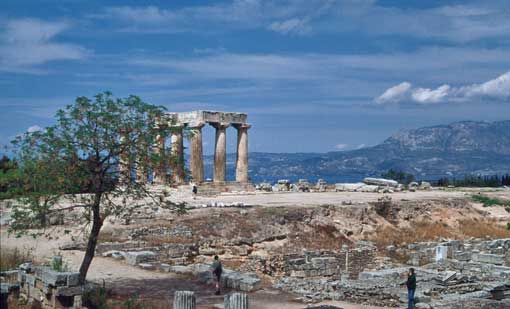
Corinth. The Temple of Apollo
Day 14 |
Nafplion |
In the morning, we will drive along the Bay of Nafplion to visit the small Early Bronze Age site of Lerna and then up to Argos to examine the ruins of the sanctuary of Hera,the Argive Heraion. The afternoon will be spent at Epidaurus where we will explore the remains of the Sanctuary of Asklepios, the Greek god of medicine. Among the many buildings, the most notable is the Theatre, perhaps the most perfect example in all of Greece.
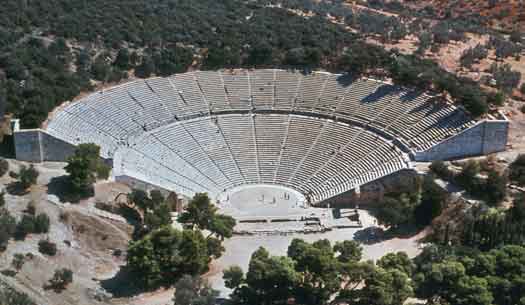
The Theatre at Epidaurus
Day 15 |
Athens |
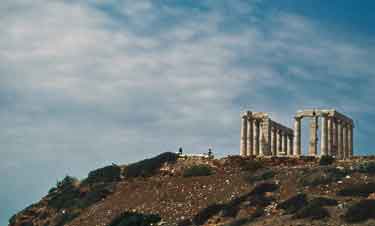
On Tuesday morning we will return to Athens for two nights. In the afternoon, we will drive down the south coast of Attica to Cape Sounion to visit the ruins of the Temple of Poseidon.
Day 16 |
Athens |
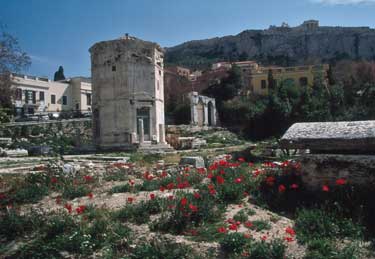
We will spend the morning exploring the remains of the Classical Agora, a short walk from the hotel. The agora was the heart of ancient Athens and the site of many of its most important public buildings as well as serving as the principal market. In the afternoon, we will visit the National Museum, which holds the country's most important archaeological treasures, including the gold from Mycenae and the miniature frescoes from Santorini along with a host of famous objects from Classical times.
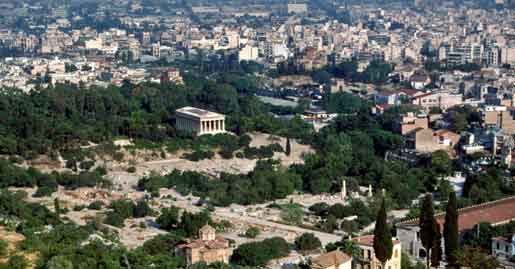
The Classical Agora at Athens, from the Acropolis
Day 17 |
End of Tour. Departures
Note:
The price of the trip includes:
hotel taxes
accommodation based on double occupancy
overland transportation via mini bus
all visits and sightseeing as per itinerary
the service of your tour conductor, Margaret Morden or William Rowbotham
The price of the trip does NOT include:
gratuities for individual services
meals, apart from hotel breakfasts
all items and expenses of a purely personal nature
travel to and from Greece
10.02.2012
